1. Characteristics of Cemented Carbide Balls for Calibration Equipment
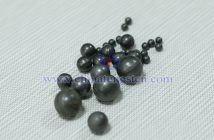
Cemented carbide balls are high-precision spheres, primarily sintered from tungsten-titanium-cobalt alloy or tungsten-titanium-tantalum-cobalt alloy, playing a crucial role in metrology and calibration. Their hardness is extremely high, far exceeding that of ordinary steel balls, providing excellent wear resistance and corrosion resistance. Their high density and low coefficient of thermal expansion ensure minimal dimensional deformation under extreme environments such as high temperatures, humidity, or acidic/alkaline conditions, maintaining long-term geometric stability.
The surface is finely ground and polished, resulting in extremely low roughness and near-perfect sphericity, with diameter tolerance controlled within the micrometer level. International standards and Chinese national standards classify accuracy levels, from ultra-precision to general-purpose, meeting diverse calibration needs. Cemented carbide balls do not rust or oxidize easily, requiring only simple moisture protection during storage, avoiding the corrosion problems common with steel balls. Overall, the combination of its materials and processes makes it an indispensable reference element in the metrological traceability chain, widely applicable to the calibration of precision instruments.

2. Working Principle of Cemented Carbide Balls in Calibration Equipment
Cemented carbide balls, as a reference standard with known geometry, establish a measurement benchmark through contact with the equipment being calibrated or optical imaging. Its core lies in "known invariance"—the ball's diameter, sphericity, and surface quality are traceable and certified by authoritative institutions, with minimal error. During calibration, the equipment's probe or sensor scans or contacts the ball multiple times, collecting data which is then compared with standard values to calculate the equipment's systematic error, repeatability error, and linearity deviation.
For example, in a coordinate measuring machine (CMM), the ball is placed on the worktable, the probe moves around the sphere, and the system records the coordinates of each point, reconstructing the ball's center position. If the reconstructed center deviates significantly from the actual position, it indicates a positioning error in the equipment. Through this comparison method, the cemented carbide ball transforms the abstract concept of "precision" into quantifiable correction parameters, helping engineers adjust the equipment's compensation table. Similarly, in surface roughness testers, the spherical surface serves as an ideal smooth reference surface to calibrate the probe radius compensation and instrument resolution. The fundamental principle is to utilize the isotropy of the sphere to ensure that calibration results are unaffected by direction, achieving highly reliable error traceability.

3. Applications of Cemented Carbide Balls in Calibration Equipment
Cemented carbide balls are widely used in the periodic calibration and acceptance of various precision measuring equipment. In the field of coordinate measuring machines (CMMs), they are a core tool for verifying probe performance and spatial accuracy, commonly used for pre-inspection calibration of high-precision parts such as aero-engine blades and automotive molds. Surface roughness testers rely on their smooth spherical surfaces to calibrate probes, ensuring the reliability of micro-profile measurements, and are commonly used in semiconductor wafer and optical lens processing.
In hardness testing equipment, cemented carbide balls serve as indenters or reference spheres to assist in measuring indentation dimensions, ensuring the accuracy of Brinell and Rockwell hardness values. Non-contact devices such as optical coordinate measuring machines, white light interferometers, and laser trackers also use cemented carbide balls as spatial reference points to calibrate system resolution and coordinate consistency. Furthermore, it also serves as a standard reference in instruments such as length measuring instruments, roundness testers, and gear measuring centers.
Companies typically develop calibration plans based on usage frequency, prioritizing ultra-precision balls for high-precision applications, often accompanied by international traceable certificates. Maintenance requires only periodic cleaning and moisture-free storage for long-term reuse. With its excellent stability and durability, cemented carbide balls support the entire metrological chain from the laboratory to the production workshop, driving continuous improvement in quality control levels in the manufacturing industry.