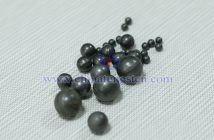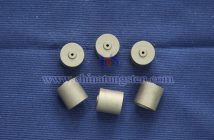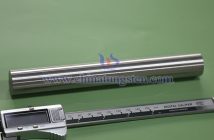
Whenever you hold a ballpoint pen and it glides across the paper, making a soft scratching sound, what drives the ink flow from the nib is a cemented carbide ball with a diameter of only 0.5-1.0 millimeters—this miniature marvel hidden in the pen tip is arguably one of the most revolutionary inventions in the history of modern writing.

The invention of the cemented carbide ball completely changed the writing experience. It is typically made using powder metallurgy with tungsten carbide and cobalt as a binder, achieving a hardness of HRA90 or higher, approaching that of natural diamonds. This exceptional hardness allows it to withstand thousands of frictional impacts per minute against the paper during writing, extending its lifespan to thousands of meters of writing distance. Simultaneously, materials scientists, through precise formulation and process control, have preserved just the right amount of toughness within this extreme hardness, ensuring that the ball neither deforms nor breaks under writing pressure.
The manufacture of this miniature ball is a model of precision engineering. From raw material preparation and molding sintering to multiple precision grinding and polishing processes, submicron-level sphericity and mirror-like finish are achieved. When this perfect ball is precisely assembled within the pen tip holder and rotates freely with a 5-10 micrometer gap, it forms an ideal ink delivery system: effectively scraping ink from the pen barrel and creating a uniform ink spread on the paper.

From a cultural perspective, this tiny ball carries value beyond the technology itself. It makes smooth writing a part of everyday life, promoting knowledge dissemination and education. Whether it's neat handwriting in a student's notebook, shorthand notes in an office, or a sketch by an artist, behind it all is the silent rotation of this cemented carbide ball. It narrows the time gap between thought and record, allowing inspiration to be captured instantly.
Today, with the emergence of new writing tools such as 3D printed pens and smart styluses, cemented carbide ball technology continues to evolve. Nanoscale surface treatment technology further reduces writing resistance, and special coating technology enhances ink compatibility. This miniature ball, developed over half a century, continues to thrive through technological innovation.
In a sense, the cemented carbide ball perfectly embodies the philosophy of "small is big"—with its millimeter-sized dimensions, it supports the writing memory of modern human civilization. In today's world where digital technology dominates everything, every time the pen tip touches the paper, we can still feel the reassurance and warmth brought by this tiny yet great invention.