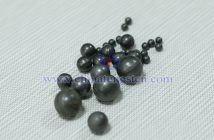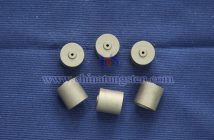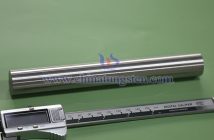
Cemented carbide balls for ballpoint pens, commonly known as tungsten carbide balls, are spherical materials made primarily of micron-sized metal carbide powders such as tungsten carbide (WC), with binders such as cobalt (Co) and nickel (Ni), sintered using powder metallurgy. These balls play a crucial role in ballpoint pen manufacturing due to their unique physical and chemical properties.
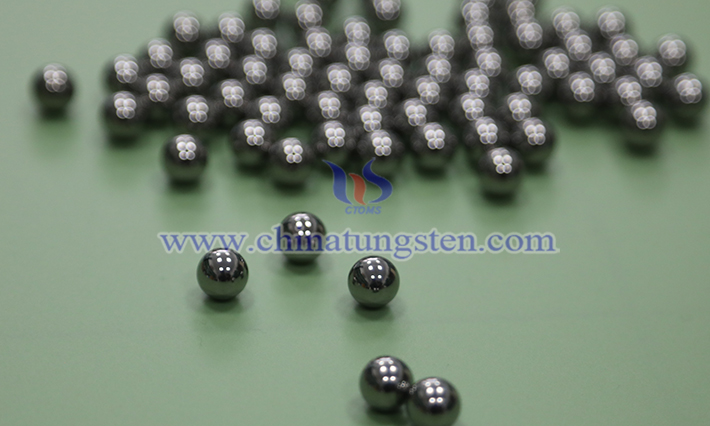
Cemented carbide balls possess extremely high hardness and wear resistance, far exceeding that of ordinary steel. They can withstand immense pressure and friction without easily deforming or wearing down. This characteristic allows cemented carbide balls to maintain stable performance and dimensional accuracy during prolonged writing, preventing wear or deformation and ensuring writing quality and smoothness. Furthermore, cemented carbide balls possess excellent corrosion resistance and high-temperature resistance. Even in harsh working environments, such as prolonged contact with ink or exposure to high temperatures, they maintain stable performance and are not easily corroded or oxidized.
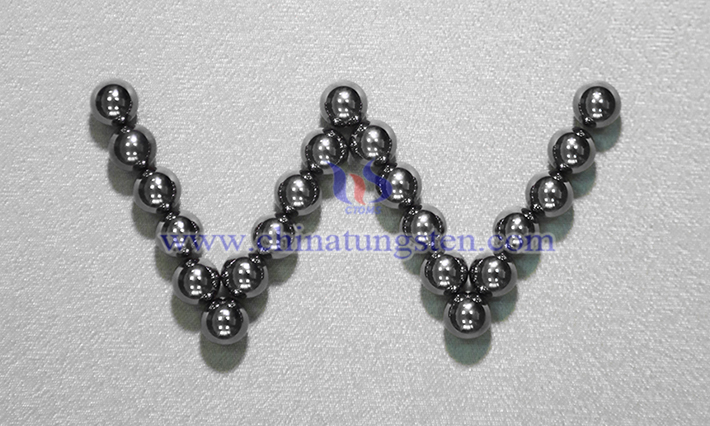
In ballpoint pen manufacturing, the application of cemented carbide balls not only improves the durability of the pen tip and the smoothness of writing but also drives the continuous advancement of ballpoint pen technology. With the continuous development of materials science and processing technology, the manufacturing process of cemented carbide balls has become increasingly mature, with continuously improving precision and performance. Today, cemented carbide balls have become the preferred material for high-end ballpoint pens and are widely used in precision bearings, instruments, pen manufacturing, and many other fields.
It is worth mentioning that the manufacturing process of cemented carbide balls requires extremely high standards for raw material selection and process control. High-purity, fine-grained metal carbide powder and binders must be selected as raw materials to ensure the physical properties and chemical stability of the balls. Simultaneously, the sintering temperature, time, atmosphere, and other parameters must be strictly controlled during the manufacturing process to obtain cemented carbide balls with good density and excellent performance.