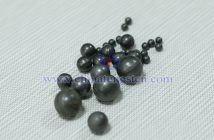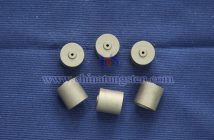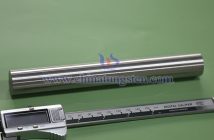
Cemented carbide balls are consumables for Rockwell, Brinell, and Vickers hardness testers, primarily used for indentation testing to assess material hardness. They are made primarily of tungsten carbide, supplemented with binders such as cobalt, using powder metallurgy. These balls exhibit extremely high hardness and excellent wear resistance, making them an ideal replacement for traditional steel balls, ensuring stable and reliable measurement processes, and are widely used in materials testing.

1. Characteristics of Cemented Carbide Balls for Hardness Testers
Cemented carbide balls possess several superior properties that make them stand out in hardness testing. First, their hardness far exceeds that of ordinary steel balls, and their surface is as smooth as a mirror, reducing friction interference during testing. Second, they exhibit outstanding wear resistance, remaining undeformed or worn even after repeated use, maintaining long-term accuracy. Third, they have a high elastic modulus and strong compressive strength, capable of withstanding large loads without permanent deformation. Furthermore, it has a high density, good chemical stability, and is not easily affected by environmental corrosion. These characteristics collectively ensure the repeatability and accuracy of test results, avoiding errors caused by indenter damage.
2. Application Principle of Cemented Carbide Balls in Hardness Testers
The application of cemented carbide balls is based on the indentation method. In Brinell hardness testing, the ball is pressed into the sample surface under a constant load, forming a circular indentation. The hardness value is then calculated by measuring the diameter of the indentation. Rockwell hardness testers use a two-step process of pre-compression and main compression. First, a light pressure is applied with the ball to establish a reference, then the main load is applied, and the hardness is calculated based on the difference in indentation depth. Vickers testing occasionally uses small balls for preliminary positioning. Compared to steel balls, hard alloy balls have minimal deformation and can accurately transmit mechanical loads, making them particularly suitable for testing high-hardness materials. They also prevent wear of the ball itself from affecting the indentation shape, thus improving overall measurement reliability.

3. Application Scenarios of Cemented Carbide Balls in Hardness Testers
Cemented carbide balls are widely used in various industries. In the aerospace field, they are used to test the hardness of high-strength alloys such as engine blades and turbine disks to ensure the fatigue resistance of components. In the automotive industry, it assesses the surface hardness of critical components such as cylinder blocks and crankshafts to optimize heat treatment processes. The mold industry relies on it to test the wear-resistant layer hardness of cutting tools and stamping dies, extending their service life. Furthermore, it is frequently used in the electronics, ceramics, and metallurgical fields for new material research and development and quality control. Routine maintenance includes alcohol cleaning, dry storage, and periodic wear checks to extend its lifespan. In the future, with the development of nano-coating technology, this sphere will further enhance corrosion resistance and precision, driving progress in materials science. Guided by global standards, it has become an indispensable tool for hardness measurement.