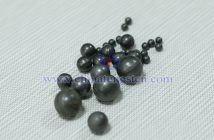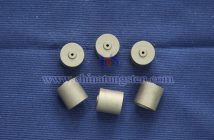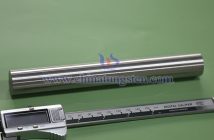
Cemented carbide balls are powder metallurgy products made by sintering micron-sized powders of high-hardness refractory metal carbides (such as WC and TiC) in a vacuum or hydrogen reduction furnace using cobalt (Co), nickel (Ni), or molybdenum (Mo) binders as the core component. Their hardness generally reaches HRA90 or higher, with a density of approximately 14.9 g/cm3. Their wear resistance is tens or even hundreds of times greater than that of traditional steel balls, and they also possess excellent corrosion resistance and high-temperature resistance, allowing for long-term stable operation under extreme conditions.

In pump bearing applications, the core advantages of cemented carbide balls are reflected in three aspects:
1. Adaptability to extreme working conditions: In oil drilling pumps, cemented carbide valve balls must withstand complex media such as sand-containing, heavy oil, and high-pressure drainage. Their wear resistance and corrosion resistance prevent sealing failure between the valve ball and seat due to media erosion. For example, deep-sea drilling pump valve balls can still achieve bidirectional sealing through the precise fit between the ball and seat in high-pressure (hundreds of megapascals) and low-temperature (near 0°C) environments, ensuring efficient pump operation.
2. Long life and low maintenance: In chemical pumps, cemented carbide bearing balls can replace traditional steel balls. Their high hardness allows the bearing to maintain dimensional stability under high-speed (linear velocity exceeding 10 m/s) and heavy-load (loads reaching several tons) conditions, extending life by 3-5 times and significantly reducing equipment downtime for maintenance. 3. Precision Machining Support: In precision instrument pumps, the surface finish of cemented carbide balls can reach G25 grade. Combined with cold isostatic pressing and vacuum sintering processes, non-standard customization with diameters ranging from 0.3mm to 70mm can be achieved, meeting the transmission requirements of micro-flow pumps or high-precision metering pumps.

In practical applications, grades such as YG6 and YG8, due to their moderate cobalt content (6%-8%), which balances hardness and toughness, have become the mainstream choice for pump bearings.