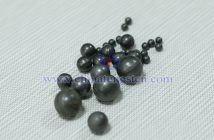
Micropumps are the core of precision fluid control, widely used in medical injection, bioanalysis, chip cooling, and laboratory automation. Their key sealing element—the cemented carbide ball—is typically made of tungsten-cobalt alloy (WC-Co), with a moderate cobalt content ensuring a balance between high hardness and toughness. The ball's surface is mirror-smooth, with extremely high roundness, perfectly fitting the micro-valve seat for a reliable one-way seal.

1. Characteristics of Cemented Carbide Balls for Micropumps:
Extreme Wear Resistance: Hardness far exceeds that of stainless steel; it retains its shape even after millions of cycles of friction, suitable for high-frequency diaphragm pumps or peristaltic pumps.
Chemical Inertness: Resistant to strong acids, alkalis, and most organic solvents; corrosion rate is near zero, ideal for conveying pharmaceuticals, reagents, or corrosive fluids.
Thermal Stability: Stable operation at high temperatures with no risk of deformation, suitable for semiconductor cooling systems.
Low Friction: Functional coatings can be applied to the surface, resulting in an extremely low coefficient of friction, reducing pump resistance and improving response speed and energy efficiency.
Precision Dimensions: Diameters range from micrometers to millimeters, with stringent tolerances to ensure accurate microfluidic dosing.

2. Applications of Cemented Carbide Balls in Micropumps:
Insulin Pumps: Cemented carbide balls ensure minimal error with each injection, guaranteeing patient safety.
Chip Liquid Cooling: High temperature and corrosion resistant, supporting high heat flux density heat dissipation, contributing to stable operation of AI servers.
In Vitro Diagnostic Instruments: Prevents sample backflow in microfluidic chips, ensuring accurate test results.
Aerospace Micro-Propulsion: Provides reliable sealing despite lightweight design, adapting to extreme environments.
Compared to ceramic balls, cemented carbide balls are more durable and less prone to breakage; compared to plastic balls, their temperature and pressure resistance is superior; although the initial cost is slightly higher, the overall cost-effectiveness over the entire lifecycle is outstanding. In the future, with the integration of additive manufacturing, it will be possible to realize spheres with complex internal cavities or gradient structures, opening a new realm of pump efficiency.