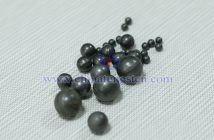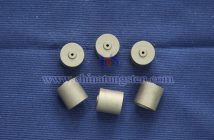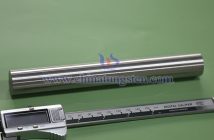
Cemented carbide balls for drilling rig bearings are core wear-resistant components in oil drilling, geological exploration, and other fields. They are made with tungsten carbide (WC) or titanium carbide (TiC) as the matrix, sintered using powder metallurgy with cobalt (Co) and nickel (Ni) as binders. They possess high hardness, high wear resistance, and corrosion resistance, making them a preferred material to replace traditional steel balls.

1. Material Characteristics and Process Advantages of Cemented Carbide Balls Cemented carbide balls can achieve a hardness of over 90.5 HRA, a density of approximately 14.9 g/cm3, and wear resistance dozens of times that of steel balls. They maintain dimensional stability even under extreme operating conditions. For example, in the application of support rolls in hot rolling mills in steel enterprises, bearings equipped with cemented carbide balls experience extended service life and reduced equipment failure rates when subjected to thousands of tons of rolling force. Its manufacturing process employs vacuum or high-pressure sintering technology to ensure the material is dense and non-porous, and it supports customization of non-standard sizes, specifications, and content.

2. The Role of Cemented Carbide Balls in Drill Rig Bearings
In oil drilling, cemented carbide balls are widely used in critical components such as roller cone bits and down-the-hole bits. For example, a certain type of drill rig bearing uses a three-combination structure: a four-point angular contact ball bearing provides rotational support, while large and small cemented carbide sliding bearings bear axial and radial loads respectively. The high hardness of the cemented carbide balls resists the impact and wear of rock cuttings during drilling, and their corrosion resistance adapts to the acidic environment of drilling fluids, ensuring stable operation of the bearing under high temperature and pressure. Furthermore, its low coefficient of thermal expansion and high bending strength (≥4200MPa) further improve drilling efficiency, and the passivation cycle is extended by 5-6 times compared to traditional cutting edge tips, significantly reducing downtime for maintenance.
3. Application Expansion and Industry Trends of Cemented Carbide Balls Besides drilling rig bearings, cemented carbide balls are widely used in mining, tunnel engineering, and snowplow equipment. With breakthroughs in material modification technologies (such as rare earth doping), their anti-adhesive wear performance has been further improved, driving the evolution of high-end equipment towards high efficiency and low carbon emissions.