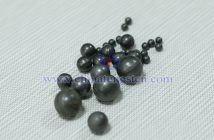
Cemented carbide bearing balls are spherical rolling elements manufactured using powder metallurgy processes. They are based on a high-hardness refractory metal carbide (such as WC) matrix, with cobalt (Co) or nickel (Ni) and molybdenum (Mo) as binders. Their core characteristics include high hardness (HRA 90-92), ultra-high wear resistance (tens to hundreds of times that of steel balls), corrosion resistance, bending resistance, and high-temperature resistance. These properties make them an ideal replacement for traditional steel balls under extreme operating conditions. The following is a brief overview of the main applications of cemented carbide bearing balls.

I. High-end Manufacturing: Breaking the Limits of Traditional Materials
1. Aerospace
Application Scenarios: Fighter jet spindle bearings, satellite attitude control components.
Technical Advantages: Cemented carbide balls have a hardness close to diamond, allowing them to withstand high-speed rotation (such as the tens of thousands of revolutions per minute of fighter jet spindle speeds) and extreme temperatures (such as the need for satellite components to withstand temperature differences from -180℃ to 200℃). 2. Precision Machine Tools
Application Scenarios: Five-axis machining centers, ultra-precision grinding machine spindles.
Technical Advantages: Low coefficient of friction (60% lower than steel balls) reduces energy loss; high wear resistance ensures long-term precision stability.
II. Energy and Heavy Industry: Coping with Extreme Working Conditions
1. Oil Drilling
Application Scenarios: Rotary steering systems, mud pump plungers, downhole motor bearings.
Technical Advantages: In drilling fluids containing abrasive particles, cemented carbide balls can withstand temperatures above 200℃ and pressures of 100 MPa, extending service life by 3-5 times compared to traditional steel bearings.
2. Iron and Steel Metallurgy
Application Scenarios: Hot-rolled finishing mill support roll bearings.
Technical Advantages: Under rolling forces of thousands of tons, cemented carbide balls exhibit 3-5 times greater wear resistance than steel balls, reducing equipment failure rates by 30%.

III. Emerging Industries: Driving Technological Innovation
1. New Energy Equipment
Application Scenarios: Wind turbine gearboxes, new energy vehicle electric drive systems. Technical Advantages: Maintains stable operation within a temperature range of -40℃ to 80℃, extending the maintenance cycle from 6 months to 18 months.
2. Medical Equipment
Application Scenarios: Artificial joints, surgical robot joints.
Technical Advantages: Excellent biocompatibility; surface smoothness (Ra≤0.01μm) reduces wear rate to 1/10 of metal bearings.
IV. Everyday and Specialized Fields: Expanding Application Boundaries
1. Consumer Electronics
Application Scenarios: Racing roller skates, high-end headphone hinges.
Technical Advantages: Low noise and long lifespan support high-intensity use.
2. Chemical and Marine Engineering
Application Scenarios: Chemical pumps, deep-sea probe joints.
Technical Advantages: Resistant to acid and alkali corrosion; lifespan increased by 5 times in highly corrosive media such as hydrochloric acid.