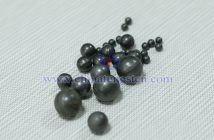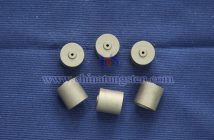
Tungsten carbide bearing balls are not standard components in ordinary bearings, but rather key components that demonstrate superior performance under extremely demanding operating conditions. Their core value lies in solving problems that ordinary steel balls cannot handle, and they are primarily used in specialized fields with extremely high requirements for wear resistance, rigidity, corrosion resistance, and stability.
Tungsten carbide is made from tungsten carbide powder and metal binders such as cobalt through powder metallurgy. This process endows it with extraordinary properties far exceeding those of traditional bearing steel: extremely high hardness, excellent wear resistance, remarkable compressive strength, and good corrosion resistance. These characteristics determine the unique applications of tungsten carbide bearing balls.

The main applications of tungsten carbide bearing balls can be summarized as follows:
Firstly, in high-wear, high-precision instruments and equipment. For example, precision measuring instruments, high-rigidity spindles, and gyroscopes in aerospace navigation systems. These devices often require extremely stable and precise rotational accuracy during long-term operation; even the slightest wear can lead to measurement inaccuracies or performance degradation. Tungsten carbide balls, with their virtually wear-free characteristics, ensure consistently stable accuracy throughout the device's lifespan.
Secondly, in harsh, corrosive environments. In chemical machinery, deep-sea exploration equipment, or certain medical instruments, components come into contact with corrosive liquids or gases. Ordinary steel is easily corroded and rusted, which can cause bearings to seize or be damaged. Tungsten carbide balls' excellent resistance to acid and alkali corrosion allows them to operate stably for extended periods in such environments, significantly extending the equipment's lifespan and reliability.

Furthermore, under extreme heavy-load and high-pressure conditions. Some oil drilling equipment, high-pressure valves, and critical transmission points in heavy machinery need to withstand enormous pressure and impact loads. Tungsten carbide balls' extremely high compressive strength and rigidity effectively resist deformation, preventing crushing or permanent deformation under high pressure, thus ensuring the safety and reliability of the entire transmission system. Finally, it can also be found in some special processes, such as as isolation balls in sandblasting machines or material conveying pumps. These need to work under the high-speed scouring of a large amount of abrasive, and the requirements for wear resistance are extremely high, making cemented carbide almost the only choice.