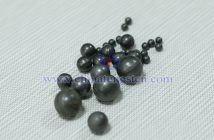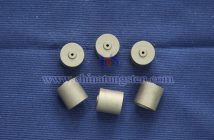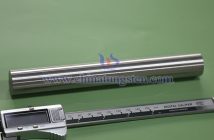
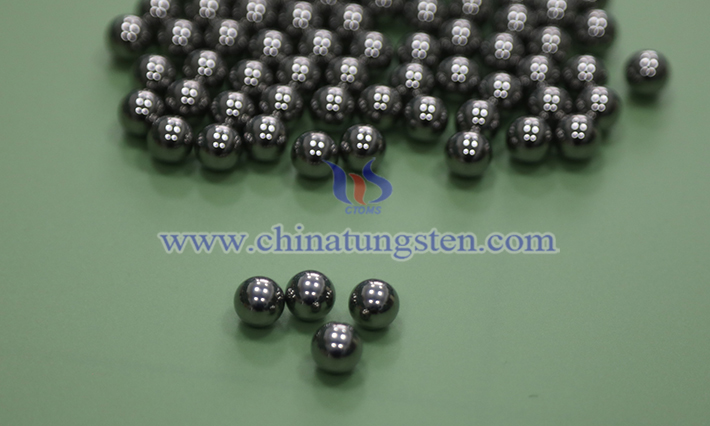
Cemented carbide bearing balls use high-hardness metal carbides such as tungsten carbide (WC) as the matrix and metals such as cobalt (Co) as the binder, and are sintered using powder metallurgy. Their performance characteristics are as follows:
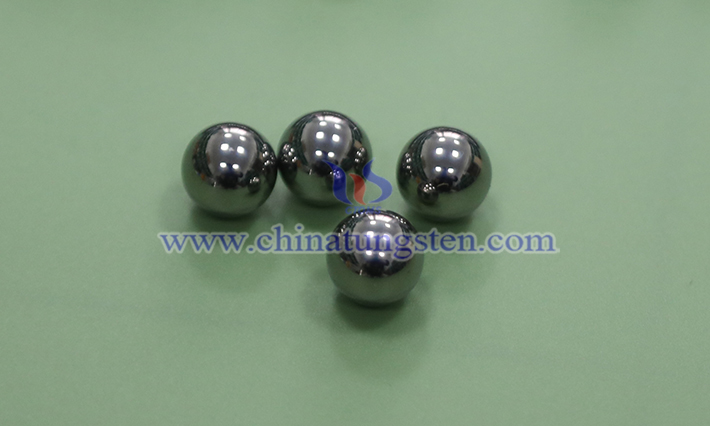
I. Core Performance Advantages of Cemented Carbide Bearing Balls
1. Ultra-high Hardness and Wear Resistance
Hardness can reach HRA 90-92, far exceeding ordinary bearing steel (HRC 60-65), and wear resistance is tens to hundreds of times that of steel balls.
In high-speed, heavy-load, or particulate-containing environments, the wear rate of cemented carbide balls is significantly lower than that of traditional materials, and their service life can be extended by tens or even hundreds of times. For example, cemented carbide balls using the YG25 grade have a service life 35-50 times longer than those using GCr15 alloy steel.
2. Excellent High-Temperature Stability: Thermal stability reaches above 417°C, maintaining high hardness and dimensional stability even under high-temperature conditions, making it suitable for high-temperature applications such as aerospace and metallurgy.
In dry friction conditions, the cobalt binder phase acts as a solid lubricant, reducing the coefficient of friction and minimizing high-temperature adhesive wear.
3. Corrosion Resistance and Chemical Stability: It exhibits good resistance to corrosive media such as acids, alkalis, and salts, making it suitable for corrosive environments such as chemical and marine engineering.
Its non-magnetic properties give it unique application value in electronics, medical, and other fields.
4. High Precision and Dimensional Stability: Through precision grinding and polishing processes, surface roughness can reach below Ra 0.01μm, meeting the requirements of high-precision bearings.
The sintering process ensures the material is dense and non-porous, preventing crack propagation caused by stress concentration during operation.
II. Typical Application Scenarios of Cemented Carbide Bearing Balls
1. Extreme Condition Bearings
High-Temperature Bearings: Such as aero-engine and gas turbine bearings, which need to withstand high-temperature and high-speed rotation.
1. Bearings for Corrosive Environments: Such as bearings for chemical pumps and offshore platforms, requiring resistance to corrosive media.
Heavy-Duty Bearings: Such as bearings for mining machinery and rolling mills, requiring the ability to withstand enormous impact loads.
2. Precision Instruments and Equipment:
Precision machine tool spindles: Require high speed, low vibration, and long lifespan.
Medical Devices: Such as bearings for CT scanners and MRI scanners, requiring non-magnetic properties and high stability.
Aerospace: Bearings for satellite attitude control, rocket engine bearings, etc.
3. Special Function Bearings:
Vacuum bearings: Used in vacuum environment equipment to avoid lubricant evaporation and contamination.
Antimagnetic bearings: Suitable for applications sensitive to magnetic fields, such as electron microscopes and magnetic levitation systems.