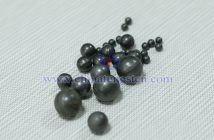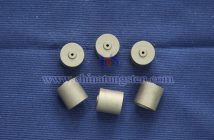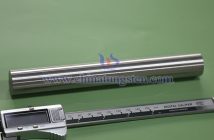
The numerous significant advantages of cemented carbide bearing balls make them a core component of high-end bearings, widely serving industries such as aerospace, energy, and precision manufacturing.
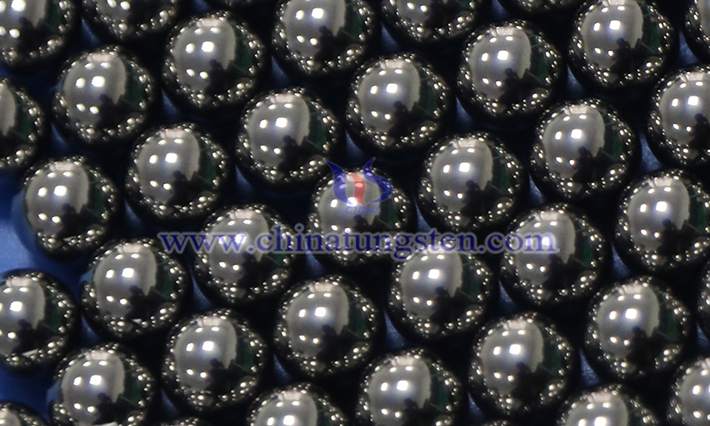
The primary advantage of cemented carbide bearing balls lies in their extremely high hardness and wear resistance. Cemented carbide is typically sintered from high-melting-point metal compounds such as tungsten and cobalt, resulting in a hardness far exceeding that of traditional steel balls. Even under high-speed friction environments, they maintain a smooth surface, significantly extending bearing life and reducing replacement frequency.
Secondly, cemented carbide bearing balls possess excellent corrosion resistance. They are not easily rusted or oxidized in acidic, alkaline, salt spray, or humid environments, making them particularly suitable for harsh conditions such as chemical and marine engineering applications. Compared to ordinary steel balls, which are susceptible to corrosion and subsequent decrease in precision, cemented carbide maintains stable operation over long periods, reducing maintenance costs.
Furthermore, its high-temperature stability is outstanding. At high temperatures, cemented carbide retains its strength and dimensional accuracy, resisting softening and deformation. This makes it widely used in high-temperature, high-speed equipment such as aero engines and gas turbines, ensuring reliable operation under extreme conditions.
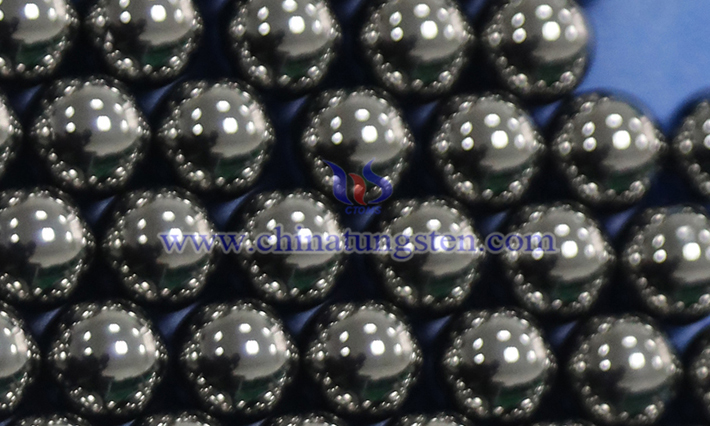
Cemented carbide bearing balls also exhibit excellent fatigue resistance. Under prolonged alternating loads, the surface is less prone to micro-cracks, maintaining smooth rolling, reducing vibration and noise, and improving overall equipment stability. This is particularly important for precision machine tools and CNC equipment.
In terms of load capacity, the high strength of cemented carbide allows it to withstand greater pressure without deformation, making it suitable for heavy-duty machinery such as mining equipment and wind power transmission systems. Its low coefficient of thermal expansion further ensures dimensional stability at high temperatures, preventing jamming caused by thermal expansion and contraction.
Compared to traditional materials, cemented carbide bearing balls have a higher initial cost, but their long lifespan and low failure rate make them a superior choice in terms of overall cost-effectiveness. Their self-lubricating properties can also reduce lubricant dependence and simplify maintenance in certain formulations.