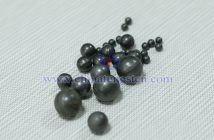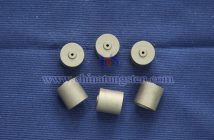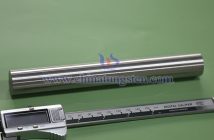
In many industrial sectors, high-temperature operating conditions pose a severe test to the reliability of mechanical equipment. As temperatures continue to rise, conventional steel bearing balls soften rapidly, deform, and fail prematurely due to a sharp decrease in hardness and wear resistance. Under these harsh conditions, tungsten carbide bearing balls, with their superior comprehensive performance, become an irreplaceable key component.

Carbide is primarily composed of high-hardness tungsten carbide particles and a cobalt binder phase, synthesized through powder metallurgy. This unique structure endows it with unparalleled properties. Its core advantage lies in its extremely high "hot hardness" or "red hardness," meaning its ability to maintain high hardness and strength even at high temperatures. When ambient temperatures rise and ordinary steel balls are no longer able to withstand the load, the hardness reduction of tungsten carbide bearing balls is negligible, effectively resisting plastic deformation and wear caused by high temperature and pressure, ensuring stable bearing operation accuracy.

Furthermore, cemented carbide possesses excellent corrosion resistance and extremely high compressive strength. In many high-temperature applications, often accompanied by corrosive gases or media, the chemical stability of tungsten carbide bearing balls far surpasses that of ordinary steel, effectively resisting oxidation and corrosion, and extending service life. Its near-diamond-like ultra-high hardness also gives it excellent wear resistance, minimizing wear even under harsh conditions with dust or impurities.
Therefore, tungsten carbide bearing balls are widely used in high-temperature applications requiring extreme reliability. For example, in high-speed precision machine tool spindles, especially in dry cutting or high-speed grinding conditions, the generated heat is conducted to the bearings, and tungsten carbide bearing balls are the cornerstone of ensuring the long-term accuracy stability of the spindle. In the aerospace field, in engine auxiliary systems, high-temperature fans, and various special transmission devices, they ensure the equipment's reliability in high-temperature environments. Similarly, in chemical machinery, metallurgical equipment, and certain special motors, wherever there is a need for continuous high temperatures and wear and corrosion resistance, tungsten carbide bearing balls are the ideal choice.